






Tufuate kwenye Instagram
Zaidi ya kampuni ya nje.

@sawyerproducts
Follow us on Instagram











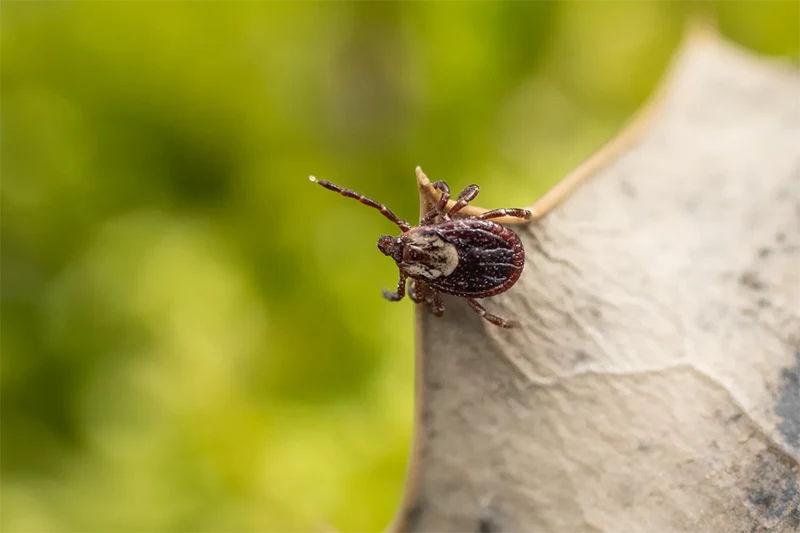
Chiggers are mites in their immature stage that might lurk in your backyard in tall grass, weed patches, and humid spots underneath trees. They might be anywhere you venture outdoors where there’s brush or thicket combined with moisture, such as along stream banks.
Chiggers cause an itchy rash that can last for several days. There are ways how you can protect yourself from getting chiggers and control them in your back yard.
If you have chiggers, against popular belief, note that they don’t burrow into your skin and, unlike mosquitoes and ticks, chiggers in the United States don’t transmit infectious diseases.
Chiggers, also known as red bugs, harvest lice, or harvest mites, are the larvae of certain mites of the Trombiculidae family. Like spiders and ticks, chiggers are arachnids. The red-colored larvae of chiggers are so small—only 1/120 to 1/150 of an inch—that you cannot see them with the naked eye.
After the mite eggs hatch in the spring, the fast-moving six-legged larvae climb onto low-growing vegetation and wait for suitable hosts to come along: cats, dogs, rodents, reptiles, birds, and humans.
The larvae attach to the skin of their host, preferably soft skin, and inject their saliva into it. The digestive enzymes in the saliva liquefies the host’s skin cells, which causes the typical chigger rash and intense itching that starts three to six hours after the chiggers have attached to the skin. If they are not removed, chiggers remain on the human skin for about four days.
When they are done feeding, the chiggers drop off. In their later stages as nymphs and adults, chiggers do not prey on hosts any longer.
In cooler climates, late spring and early summer is prime time for chiggers but in warmer, humid climates, chigger larvae can be present year-round, as they produce up to five generations per year.
Read more about how to prevent and treat chigger bites here written by Nadia Hassani.


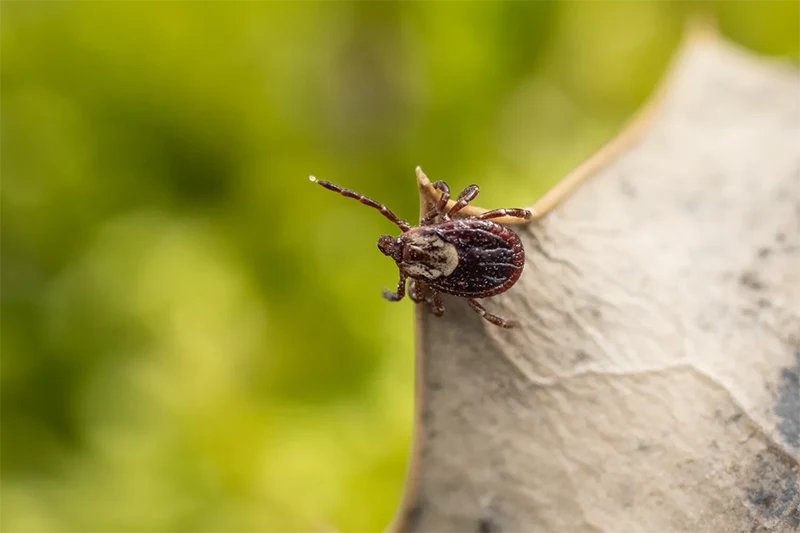
Chiggers are mites in their immature stage that might lurk in your backyard in tall grass, weed patches, and humid spots underneath trees. They might be anywhere you venture outdoors where there’s brush or thicket combined with moisture, such as along stream banks.
Chiggers cause an itchy rash that can last for several days. There are ways how you can protect yourself from getting chiggers and control them in your back yard.
If you have chiggers, against popular belief, note that they don’t burrow into your skin and, unlike mosquitoes and ticks, chiggers in the United States don’t transmit infectious diseases.
Chiggers, also known as red bugs, harvest lice, or harvest mites, are the larvae of certain mites of the Trombiculidae family. Like spiders and ticks, chiggers are arachnids. The red-colored larvae of chiggers are so small—only 1/120 to 1/150 of an inch—that you cannot see them with the naked eye.
After the mite eggs hatch in the spring, the fast-moving six-legged larvae climb onto low-growing vegetation and wait for suitable hosts to come along: cats, dogs, rodents, reptiles, birds, and humans.
The larvae attach to the skin of their host, preferably soft skin, and inject their saliva into it. The digestive enzymes in the saliva liquefies the host’s skin cells, which causes the typical chigger rash and intense itching that starts three to six hours after the chiggers have attached to the skin. If they are not removed, chiggers remain on the human skin for about four days.
When they are done feeding, the chiggers drop off. In their later stages as nymphs and adults, chiggers do not prey on hosts any longer.
In cooler climates, late spring and early summer is prime time for chiggers but in warmer, humid climates, chigger larvae can be present year-round, as they produce up to five generations per year.
Read more about how to prevent and treat chigger bites here written by Nadia Hassani.
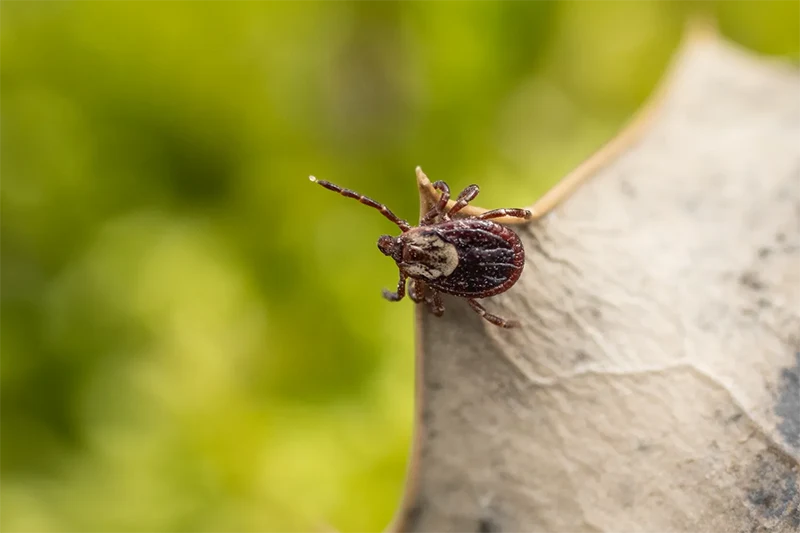
Chiggers are mites in their immature stage that might lurk in your backyard in tall grass, weed patches, and humid spots underneath trees. They might be anywhere you venture outdoors where there’s brush or thicket combined with moisture, such as along stream banks.
Chiggers cause an itchy rash that can last for several days. There are ways how you can protect yourself from getting chiggers and control them in your back yard.
If you have chiggers, against popular belief, note that they don’t burrow into your skin and, unlike mosquitoes and ticks, chiggers in the United States don’t transmit infectious diseases.
Chiggers, also known as red bugs, harvest lice, or harvest mites, are the larvae of certain mites of the Trombiculidae family. Like spiders and ticks, chiggers are arachnids. The red-colored larvae of chiggers are so small—only 1/120 to 1/150 of an inch—that you cannot see them with the naked eye.
After the mite eggs hatch in the spring, the fast-moving six-legged larvae climb onto low-growing vegetation and wait for suitable hosts to come along: cats, dogs, rodents, reptiles, birds, and humans.
The larvae attach to the skin of their host, preferably soft skin, and inject their saliva into it. The digestive enzymes in the saliva liquefies the host’s skin cells, which causes the typical chigger rash and intense itching that starts three to six hours after the chiggers have attached to the skin. If they are not removed, chiggers remain on the human skin for about four days.
When they are done feeding, the chiggers drop off. In their later stages as nymphs and adults, chiggers do not prey on hosts any longer.
In cooler climates, late spring and early summer is prime time for chiggers but in warmer, humid climates, chigger larvae can be present year-round, as they produce up to five generations per year.
Read more about how to prevent and treat chigger bites here written by Nadia Hassani.
Zaidi ya kampuni ya nje.

